
Today’s meditation
From the reputation and remembrance of my father, modesty and a manly character.
You don’t need to finish the book to begin. A simple practice for reading slowly, noticing what matters, and taking one thought into your day.
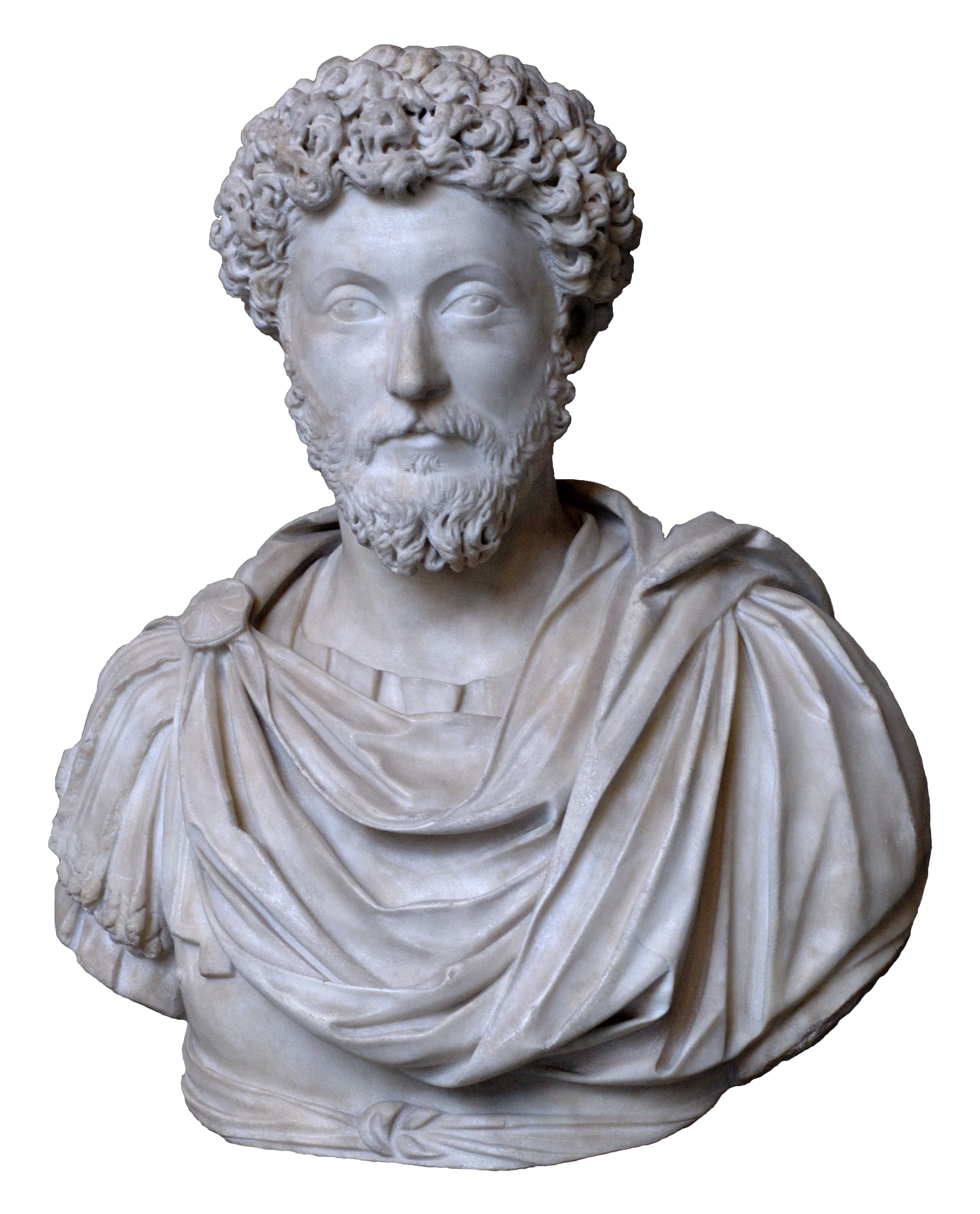
Cropped and displayed in grayscale.
It is easy to turn reading into another thing to complete. We count pages, collect quotations, and imagine that understanding will arrive when we reach the end. With Meditations, try a smaller ambition: read one passage carefully enough that it changes what you notice today.
Some days that will take five minutes. Other days a sentence will stay with you much longer. Neither needs to become a test of how disciplined you are.
Open today’s meditation. Read the whole passage once, without trying to extract a lesson from every line. Let the unfamiliar phrasing be unfamiliar for a moment.
This site uses the George Long translation, so you will encounter words such as “thou” and sentences that ask for a second reading. If a sentence feels dense, pause at its punctuation. Try saying its central thought in your own ordinary language, then check that thought against the original.
One passage is enough. You can explore the collection when you want more context, but there is no reading quota to catch up with tomorrow.
On a second reading, choose a line that catches your attention. It might be comforting. It might be irritating. Both can be useful starting points.
In Book I, section 1, Marcus begins with a particular person and a particular lesson:
From my grandfather Verus [I learned] good morals and the government of my temper.
Marcus Aurelius, Meditations I.1, translated by George Long.
That brief passage offers a surprisingly concrete place to start. Instead of asking what wisdom means in general, ask who has shown you how to behave. Who taught you to wait before answering? Who made patience visible in a difficult conversation?
You do not have to agree with every thought in the book. Reading carefully includes noticing where you hesitate, what you do not understand, and what you would like to question.
A passage becomes more useful when it meets a real part of your day. Before closing the page, name one situation in which you could remember it.
For the opening passage, that might mean thanking someone whose example has stayed with you. It might mean borrowing their patience in a conversation you are already expecting to find difficult.
Keep the action small enough to recognise:
These are suggestions for practice, not quotations from Marcus. Their value is in making your reading specific. “Be better” is difficult to act on; “listen to the whole answer” gives you something to try.
You can use the same simple rhythm with almost any passage:
A notebook is optional. So is writing at all. If you want to find a passage again, save it to your kept thoughts in the collection; those bookmarks stay on this device.
Some passages will not meet you where you are. That is all right. You can come back to them after a different day, a difficult week, or a conversation that gives the words a new setting.
If you would like a longer passage to sit with next, try Book IV, section 3, where Marcus reflects on retreating into oneself and returning to the world. Read it as an invitation to examine your attention, and take time with the parts that resist an easy summary.
For now, begin with one passage. Carry one thought. See what happens when you give it a little of your day.