
George Long, Hays, Hammond or Hard? Choosing a translation of Meditations
The English you choose changes the Marcus you hear. Who George Long suits, when a modern translation helps, and how to read the two together.
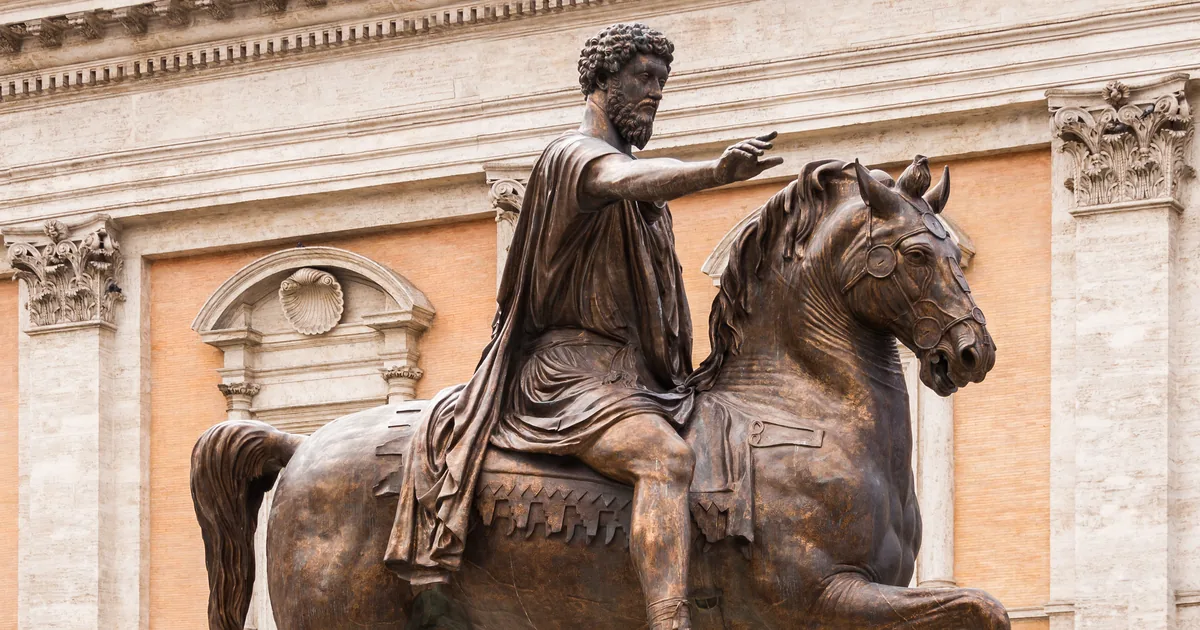

The best translation of Meditations is the one you will keep reading. For some people that is George Long, whose complete text this site publishes free. For others it is Gregory Hays, Martin Hammond, Robin Hard or Robin Waterfield. The English changes how long Marcus takes to finish a thought, how warm his idea of kinship is, and whether a sentence opens the first time you meet it.
He wrote the notes to himself, in Greek, without planning a public book. A translator either stays near those sentences or rebuilds them in the language we speak. This site has chosen Long. What follows says who that suits, and who should choose another English.
Why there are so many translations
The book is short, personal, and rough at the edges, so translators keep returning to it. A few lines may hold a moral exercise, a Stoic term, and a rebuke Marcus has just aimed at himself. He repeats, quotes earlier philosophers, and shifts register without a signal. Each habit forces a decision, and the decision shows in English.
A nineteenth-century version asks for “thou” and a sentence that finds its shape at the end. A recent one lets an emperor sound like a man thinking on a given morning, while leaving him a Stoic. Numbered sections make the comparison practical. Open the same place in two editions and you can watch a translator choose.
George Long (1862): what you get, free
George Long (1800–1879) published his translation in London in 1862, with Bell and Daldy, as The Thoughts of the Emperor M. Aurelius Antoninus. What you are reading here is the George Long translation of Meditations. It is in the public domain, so all twelve books can be here in full, with no account and no charge.
He follows the movement of the Greek: the long sentence, the older second person (“thou”, “thy”, “thyself”), and square brackets where he supplies a word the English needs. The collection is every section. Today’s meditation is one of them, set out for the day.
Long suits you if you want the whole book now, if a little resistance in the prose is welcome, or if you want stable wording to quote and revisit. A word such as “unsocial” belongs to the philosophical English of the 1860s. It asks for a pause, and the pause is often the thought.
He is a steep beginning when the grammar itself is the obstacle. “Thou” is Victorian English. If a line is a puzzle before it is an idea, start in a modern translation and come back. One passage, one day describes how to stay with a single section.
He is faithful in a limited sense: the pressure of the notebook stays. Later translators have had another century and a half of scholarship, and a living language. Long’s gift is that older fidelity, free and complete.
Gregory Hays: the modern favourite
The Meditations translated by Gregory Hays was published by the Modern Library in 2002, with his introduction. It is the modern favourite because of the voice. Hays writes direct contemporary English: “you” for “thou”, and short sentences. Marcus sounds as if he is addressing himself on an ordinary morning, which is what he was doing.
The volume includes that introduction, on his life, Stoicism, and the kind of book this is, together with notes. Readers still come for the English. Asked which Meditations translation is best for a first time through, most people name Hays, and it is a sound answer. Choose him if an older text has already tired you, or if you want a paperback you can finish and read again.
Clear prose can settle a question Long leaves slightly open. Read Hays to meet the man. When you want to see where a sentence was decided, come back to Long, or to an edition with fuller notes.
Martin Hammond and Robin Hard: accuracy with notes
Two paperbacks suit a reader who wants living English, a close rendering, and notes on what that closeness protects.
Martin Hammond’s translation appeared from Penguin Classics in 2006, with his notes and an introduction by Diskin Clay. The English is clear and more formal than Hays. Notes, indexes, and a chronology give a name or a Stoic term somewhere to land. Hammond also translated Homer for Penguin, and the same care shows: modern sentences that still answer to the Greek.
Robin Hard’s translation in the Oxford World’s Classics series was published in 2011, with an introduction and notes by Christopher Gill, who sets the book in ancient philosophy. It includes a selection of Marcus’s letters to his tutor Fronto, a younger and less settled voice than the notebook. Hard and Gill had earlier collaborated on a Wordsworth Classics edition. Seek the Oxford volume.
Begin with either of them when you expect to question a sentence and want the question informed. They are less brisk than Hays, in fully modern grammar. Between Penguin and Oxford, choose by the introduction and by the copy you can obtain.
Robin Waterfield: the annotated study edition
Robin Waterfield’s Meditations: The Annotated Edition was published by Basic Books in 2021, with his translation, introduction, and annotations. The notes are the point. They are extensive, they run with the text, and they put historical and philosophical context on the same page as the line that raised the question.
Buy Waterfield when you mean to study, or when one passage deserves a scholar beside it. The book is heavier than a Classics paperback. A five-minute morning rarely needs that much apparatus. When a bracket in Long, or a very clear sentence in Hays, leaves a Stoic term unexplained, this is the edition that stays to answer.
One passage, several voices (II.1)
Book II, section 1 is Marcus preparing to meet difficult people, and then refusing himself the relief of contempt. This is the whole section in George Long, as the site gives it:
Begin the morning by saying to thyself, I shall meet with the busybody, the ungrateful, arrogant, deceitful, envious, unsocial. All these things happen to them by reason of their ignorance of what is good and evil. But I who have seen the nature of the good that it is beautiful, and of the bad that it is ugly, and the nature of him who does wrong, that it is akin to me; not [only] of the same blood or seed, but that it participates in [the same] intelligence and [the same] portion of the divinity, I can neither be injured by any of them, for no one can fix on me what is ugly, nor can I be angry with my kinsman, nor hate him. For we are made for co-operation, like feet, like hands, like eyelids, like the rows of the upper and lower teeth. To act against one another, then, is contrary to nature; and it is acting against one another to be vexed and to turn away.
Marcus Aurelius, Meditations II.1, translated by George Long.
The passage has its own page at Book II, section 1.
Under the Victorian surface the shape is simple: the people he will meet, a reason to refuse anger, and a body whose parts work only together.
Stop at the brackets. Long writes “not [only] of the same blood or seed”, and he supplies “the same” before “intelligence” and “portion of the divinity”. The “only” is his addition. With it, the wrongdoer is kin by blood and also by mind. The Greek is sterner: this kinship is a share in reason and the divine, and shared blood is set aside. In Hays the added “only” is absent, so the kinship you hear is of mind. The brackets show you the warmer reading, and they leave you free to decline it.
Modern versions keep that arc and change the surface. They say “you”, and they tend to divide the long central sentence. The opening list is cast in plain present-day faults, where Long ends on the cold word “unsocial”. One shift is audible at once: Long’s eyelids are eyes in Hays.
For the notes, open Hammond, Hard, or Waterfield at the same place. “Ignorance of what is good and evil” is a Stoic diagnosis: harm follows a mistake about the good. Waterfield dwells on points of that kind. Read II.1 in the edition you are weighing. The opening shows you which voice you trust.
Book IV, section 3 is a fair second test. Long begins “Men seek retreats for themselves”, then argues that a retreat into your own soul still ends with a return to the world. His sentence unspools. A recent translation usually takes the same thought in shorter steps. If you prefer one of those walks, you already know which English to live with.
Which is the best translation of Meditations?
What to read first follows from the attention you can give the book.
- Begin with Gregory Hays if you have never read the work through, or if “thou” has already stopped you. You are choosing pace, and a voice close to thinking aloud.
- Begin with Martin Hammond or Robin Hard if you want notes beside modern English that still answers to the Greek. Take Penguin or Oxford by the introduction, and by what you can find.
- Begin with Robin Waterfield if you want the annotation beside the text from the first sitting.
- Begin with George Long if you want every section now, free, and you will read slowly. Open today’s meditation or any page in the collection. When a sentence stays shut, find the same reference in a modern edition. The numbers usually agree. Where an editor has divided the text differently, the opening words will still find the place.
Then read them together. Use Long on this site for the whole book and for a daily passage. Keep Hays, Hammond, or Hard for the paragraph that will not open. Turn to Waterfield when you want a commentary. Once the English is chosen, how to read Meditations is a way to stay with one section until it meets your day.
Two books, one morning
One translation you will open tomorrow is enough. Keep a second for the sentence that resists you.
Long is already open. Read II.1 in his words, and put the centre of it into a line of your own: difficult people share your nature, and irritation sets you against your own life. If a modern copy is near, read that morning again and notice which wording you believe sooner. Keep the sentence that changes the first difficult meeting of the day. The other book can wait.